
The sale of business assets (cession de fonds de commerce) is a relatively complex transaction to execute. First, the assets to be transferred must be precisely defined: operating equipment (machinery, furniture, vehicles, etc., that are not subject to leasing), inventory, and goodwill (trademarks, website, licenses, leasehold rights / pas-de-porte, etc.). It is quite rare for accounts receivable and liabilities to be transferred, though it remains legally possible.
Existing contracts and ongoing commitments will also be transferred to the new entity, and the same applies to the staff. Customers, suppliers, and other business partners must be formally notified of the transfer by registered letter.
To make the transfer enforceable against tax authorities, they must be notified in accordance with the procedure set forth in Article 442 bis of the Belgian Income Tax Code (CIR/92). The agreement must account for the required response time (ending the month following notification) by including a condition precedent (condition suspensive). It is also essential to verify whether the business assets are free of any bank registrations, such as a pledge on business assets (gage sur fonds de commerce) or a mortgage mandate.
The applicable tax regime is corporate income tax (impôt des sociétés) levied on the capital gain generated by the sale. If the business was created rather than purchased, the capital gain on goodwill will equal the full sale value. For other assets, calculations are based on net book value—that is, original acquisition value minus accumulated depreciation.
In an asset transfer, the sale proceeds flow directly into the company. For shareholders to access these funds, they must proceed either through a dividend distribution (subject to 15% or 25% withholding tax) or by liquidating the company (subject to a 10% withholding tax on the liquidation surplus).
The sale of a business as a whole is exempt from VAT (Article 11 of the Belgian VAT Code), unlike a partial transfer of assets. As evidenced, selling business assets requires thorough, meticulous preparation, and the tax burden is far from negligible. However, the buyer gains the advantage of being able to depreciate the acquisition price. This significant tax benefit often justifies a higher sale price.
In the case of a share sale (vente de parts sociales), the business owner transfers full or partial ownership of the company along with all its contents. The sale proceeds enter their personal estate tax-free, as capital gains realized by individuals are not taxable in Belgium. Conversely, the buyer cannot depreciate the purchase price and will need to extract post-tax profits from the company to service their acquisition debt. Selling shares is also simpler to execute: the corporate entity continues its business uninterrupted, retaining its employees, contracts, and credit facilities. In essence, nothing changes except the owner. Because the share transfer can be completed via a private agreement (sous seing privé), the only official publication required is the change in management bodies published in the Moniteur belge.
The vast majority of corporate acquisitions in Belgium are structured as share sales, largely due to this simplicity of execution.
It remains to be hoped that Belgian public authorities will not undermine this framework, which some view as disproportionately advantageous. In reality, while this tax regime benefits the seller, it represents a handicap for the buyer, who forfeits the tax deductibility of the purchase price. Taxing capital gains on shares could stall M&A activity—already tested by economic crises—and jeopardize the continuity of numerous family businesses.
On the other hand, selling business assets remains entirely relevant when certain assets (such as real estate) within the company are excluded from the transaction, or when the legal entity holds historical liabilities that the buyer refuses to inherit. Certain buyers specifically target asset acquisitions to consolidate operating activities into a single legal entity.
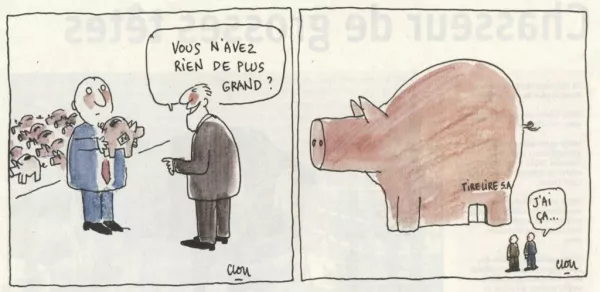
Illustration: Clou
Article initially published in La Libre Entreprise by Tanguy della Faille, Partner at Fondaris, on July 4, 2009. Published/updated version available on the Fondaris website with the author's authorization.
