Proponents of the capital gains tax on shares argue that labor and consumption are already heavily taxed in Belgium. This new tax would target speculators amassing significant short-term profits. Since this behavior was at the root of the financial crisis, it would seem appropriate to discourage it. While this intention is certainly commendable, the measure unfortunately risks missing its mark. Speculators and professional investors operate on an international scale; given that Belgium is an open economy and Belgians are rarely fiscal patriots, it is a safe bet that heavy taxation on capital would produce a major detrimental effect. One only needs to look at the many wealthy French citizens leaving their country to escape the ISF (Wealth Tax).
Thus, it will be small savers and local SME owners, lacking the means to relocate abroad, who will bear the burden of this new tax. The latter, already suffering from the economic crisis and globalization, would be particularly hard hit at the very moment they are meant to reap the fruits of their labor.
Today, most business sales are carried out through the sale of shares (stocks or equity units) in the company. By acquiring a company, the buyer assumes all of its assets and liabilities. The acquired company continues to exist with respect to third parties. The formalities for a sale are therefore lightweight:
-
Private written agreement (convention de cession sous seing privé), even if the company owns real estate
-
No special authorization or mandatory notification of customers or suppliers required: the acquired company honors its ongoing commitments
-
A simple publication in the Belgian Official Gazette (Moniteur belge) regarding the new directors or legal representatives of the company.
Alternatively, a transaction can also be structured through an asset sale (sale of the business as a going concern / fonds de commerce).
-
Tax and social security compliance certificates (attestations des administrations publiques: tax authority, VAT, social security/ONSS) to prove to the buyer that no outstanding debts exist
-
Collective agreement with staff to guarantee that seniority and salary conditions are maintained by the new employer
-
If real estate is being transferred, a notarized deed is mandatory
-
Notification of customers, suppliers, etc., regarding the takeover, along with new VAT and bank account details.
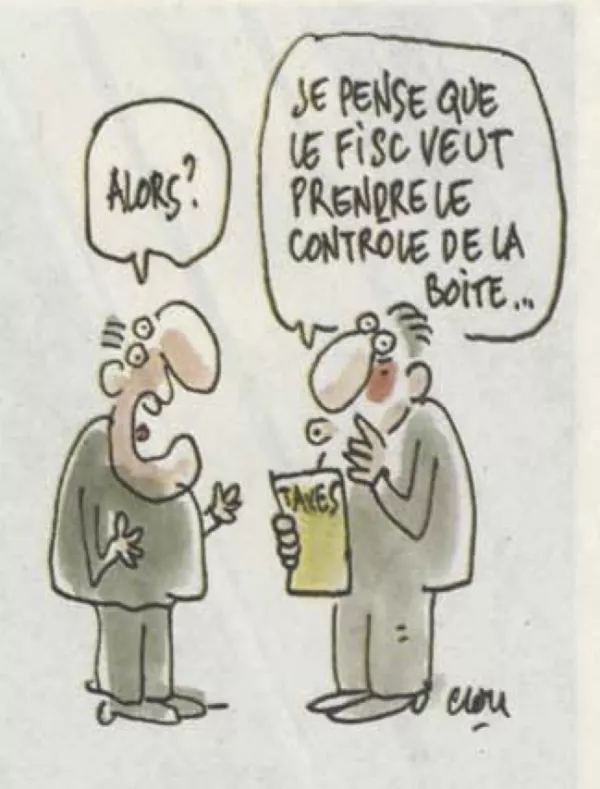
From a tax perspective, the treatment is also very different. A share sale is not taxed (for the time being), whereas an asset sale is subject to capital gains tax at the standard corporate tax rate (which was historically 33.99% and is currently 25% in Belgium). However, this difference must be nuanced, as the buyer of a business asset portfolio can depreciate their investment over time. This deductible expense will reduce the taxable base year after year. This explains why the purchase price of an asset sale is generally higher than that of a share sale. If a capital gains tax on shares were to be introduced in Belgium, it would likely have a significant impact on how SMEs are transferred, making asset sales relatively more attractive. Yet, that structure remains more complex for the contracting parties and less certain for third parties.
For an SME owner-manager, selling the company generally represents their retirement fund. They have often invested everything into their business, and the statutory pension for self-employed individuals is not enough to live comfortably. Under these circumstances, full-rate capital gains taxation seems unfair, especially when compared to the status of employees or civil servants. Notably, in France, capital gains tax on shares is partially exempt when a managing owner retires.
While one can understand the intent to tax capital more heavily in the current climate, great care must be taken to avoid implementing ineffective or inappropriate measures. The transfer of shares is an important and necessary reality to ensure the continuity of our companies. Our economy is essentially made up of SMEs that continue to drive our prosperity. In aiming to tax big capital and speculators, policymakers must ensure they do not target the wrong audience!
